Why February 29th? The History Behind Rare Disease Day
There are over 7,000 known rare diseases, impacting 25-30 million people in the United States and over 300 million people worldwide. Statistically, 1 in 10 individuals suffer from a rare condition in the U.S. Although the presence of rare diseases is felt, much of the information known remains uncharted by the public.
To combat this, Rare Disease Day was born. Established in 2008 by the European Organization for Rare Diseases – also known as EURORDIS -, a nonprofit alliance that holds over 1,000 rare disease patient organizations in 77 countries worldwide. EURORDIS intends to focus on health equity, research, and mobilizing community support while raising awareness among policymakers. With initiatives like Rare Disease Day, EURORDIS can improve the lives of countless individuals.

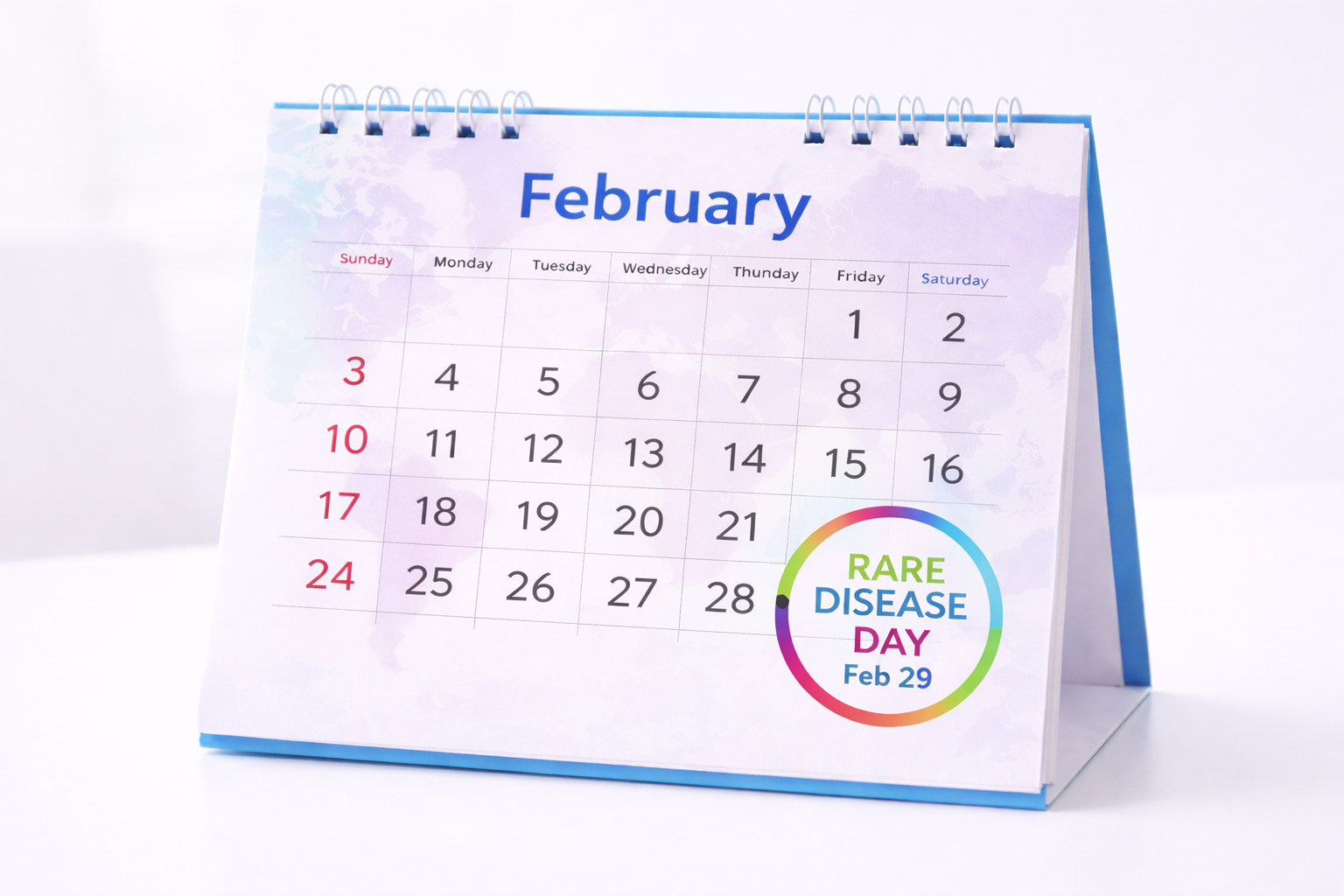
Rare Disease Day is celebrated on the last day of February, the 28th or 29th, depending on leap year, to celebrate its uniqueness. The colors (pink, blue, green, and purple), along with the symbol – a zebra, not only represent the complex nature of rare diseases, but also stem from a saying among healthcare professionals. Coined by Dr. Theodore Woodward, “When you hear hoofbeats, think horses, not zebras,” meaning that when someone is experiencing symptoms, the condition is typically something common, not rare. This symbol encourages healthcare professionals to reconsider the possibility of a rare diagnosis.
By 2009, the United States joined the movement along with countries in both Asia and South America, solidifying its status as a global campaign. Patient-researcher partnerships were created to focus on global health inequalities, with the participation ramping up to 84 countries by 2014. In 2021, the UN General Assembly formally adopted the first-ever resolution on “Addressing the Challenges of Persons Living with a Rare Disease and Their Families,” marked by Rare Disease Day and #Resolution4Rare. Now in 2026, Rare Disease Day is celebrated in over 100 countries.
In the week before the 28th/29th, events are held with informational conferences across the world, and if you happen to live in a country without these resources, you can always attend a virtual conference in another country or check out an inspirational podcast, “Rare On Air”, which presents audiences with patient stories and how they overcame their obstacles. As a fun way for teachers to engage, downloadable lessons are available in English, Romanian, Spanish, Swedish, and Portuguese. These lessons are adhered to a variety of age groups, ranging from 5-6, 7-8, 8-12, and 12-16, which educate school-aged children on rare diseases. There are also engaging activities like ‘Jeans for Genes Day’, which allow U.K children in school to show their support.
Rare Disease Day provides an opportunity. By raising global awareness, rare disease research is accelerated at the intersection of scientists, policy makers, and patients. By equipping healthcare professionals with up-to-date diagnostic procedures, rare disease care has become more efficient and effective. The future of rare diseases is bright; awareness only continues to grow every day, and legislation for advanced research with new treatments is expanding.