Advancing Science, Empowering Patients: The Stiff Person Syndrome Research Foundation’s Commitment to the Rare Disease Community
Imagine the sensation of your limbs suddenly stiffening as muscles tighten and movement becomes increasingly difficult. Your body no longer responds with the ease you expect, and even simple actions can feel physically demanding and unpredictable. For those with Stiff Person Syndrome (SPS), this scenario can range from mild stiffness to life-altering rigidity and spasms. Inspired by her own experiences of uncertainty and misdiagnoses, Tara Zier founded the Stiff Person Syndrome Research Foundation (SPSRF), the largest and only global nonprofit solely dedicated to supporting prospective clinical research, raising awareness, and finding a cure for those with ‘Stiff Person Spectrum Disorders.
After visiting 8 physicians with no answer, Zier met with Dr. Scott Newsome, a neurologist who specializes in neuro-immunological disorders and leads the John Hopkins Stiff Person Syndrome Center. As the conversation turned from her personal journey to the challenges of raising awareness for Stiff Person Syndrome and advancing patient advocacy, the foundation’s vision began to take form. Dialogue was initiated on diagnostic criteria and how many neurologists faced trouble treating the symptoms. Clinical investigation into Stiff Person Syndrome was stuck in a dilemma, given that there was not enough research to begin with in dictating that future clinical trials should be made. And after partnering with John Hopkins for a couple of years, the focus shifted from assisting to generating and driving the studies themselves.
We’ve made a strategic decision to shift resources to drive the research ourselves in conjunction with our SPS Research partners, rather than simply funding the research. This opens accessibility to the data and supporting tools for the researchers around the world, removing traditional academic barriers that can hinder progress.
To standardize the necessary data for SPS research, the SPSD Global Registry was created. The registry is a set of surveys that people with a confirmed or suspected diagnosis of SPS can complete. The surveys include an overview of how they were diagnosed and the impact of SPS in a quantifiable manner. This is to create a data set that researchers can use when understanding the condition and measuring the impact it might have on someone’s circumstances. It is also very beneficial in the sense that this data set can connect to similar initiatives in their SPS biorepository and thus, it becomes a super-charged quantifiable dataset. And to better reflect the range of related symptoms, SPSRF now refers to ‘Stiff Person Syndrome’ as ‘Stiff Person Spectrum Disorders’ (SPSD).
Our evolving understanding of SPSD symptoms highlights that the condition exists on a spectrum rather than simply in black-or-white terms. While some patients may show few, if any, outward signs of their condition, others face far more significant and visible challenges; most, however, fall somewhere in between. This broader recognition of how SPSD can present has ultimately contributed to a more inclusive set of diagnostic criteria.
Aside from research, SPSRF also focuses on the social aspect of rare diseases; SPSD in of itself can be very isolating in that it affects your life on a fundamental level, many patients lose their established independence and must adapt.
A lot of what people with SPS are doing is trying to protect themselves — minimizing startle reflexes and other triggers that can set off a flare-up. And often, home is the only environment where they feel safe enough to do that. But that can mean feeling trapped, isolated, cut off from anyone who understands what they're going through. That's part of why our annual symposium matters so much to us as a foundation. For a lot of attendees, it's the first time they've ever met another person with SPS.
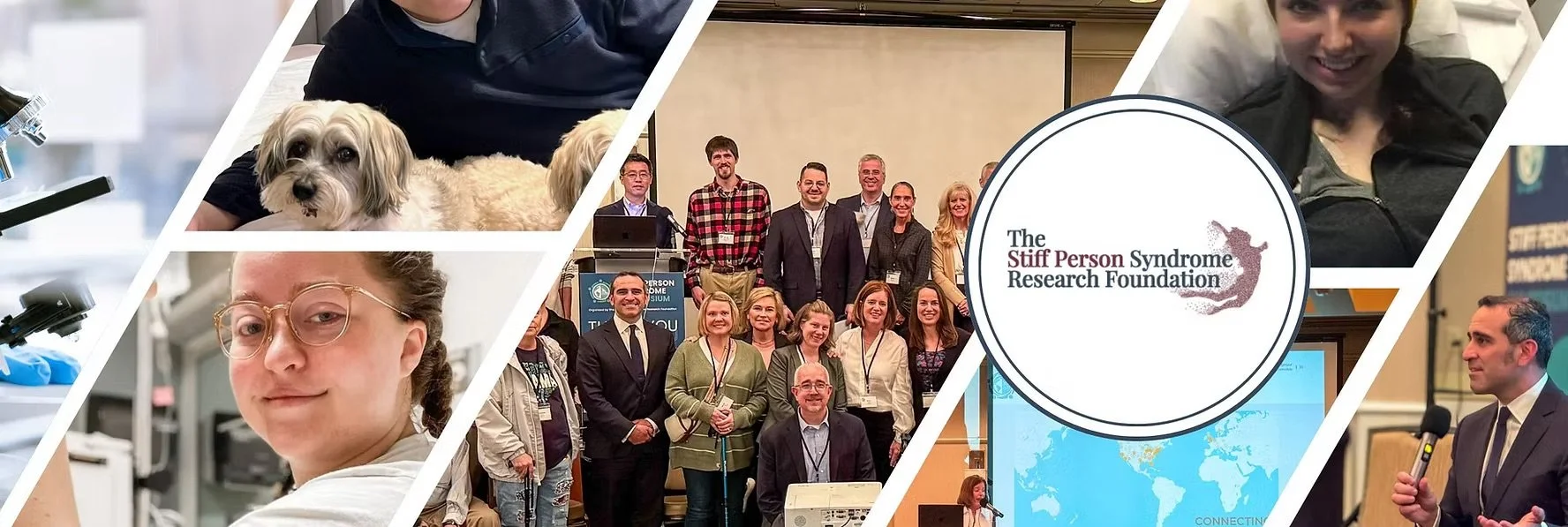
The annual symposium hosts neurologists and world-class fellows across the world speaking about the latest research findings, along with the psychological and sociological impacts surrounding rare diseases. Uniting the community together, the symposium sees around 250-300 people with SPSD gather, many struggling for years, in which they finally have a conversation with somebody else going through the same struggles. These liberating discussions remind SPSD patients that they’re not alone. Technology has increased public access to information about SPSD, with open forums being available for patients to converse.

Singer-songwriter Celine Dion has played a significant role in raising awareness through her advocacy efforts and by documenting her own journey with SPSD. Her experience illustrates how differently SPSD can manifest from one patient to the next. That range of presentation reflects why SPSRF and its research partners have worked toward a broader, more inclusive set of diagnostic criteria, recognizing that SPSD exists on a spectrum rather than in black-or-white terms.
While there are no definitive diagnostic criteria today, and instead a range of tests from electromyography to autoantibody blood tests, the first step to diagnosis is to see a neurologist. If you suspect you are suffering from SPSD symptoms, SPSRF has compiled a searchable database named the ‘Physicians Directory’. There, you can find neurologists experienced in diagnosing and treating SPSD. Currently, the U.S states listed are: California, Colorado, Connecticut, Maryland, Minnesota, Ohio, Pennsylvania, Utah, and Washington; however, the list is expected to expand within the next several months.
For more information, please visit www.stiffperson.org. There is a one-stop shop for characteristics of SPSD, recommended treatment plans, publication review, the SPSRF podcast, and everything in between. To show your support, consider making a donation, subscribing to their email newsletter, or hosting a Facebook fundraiser.