Art That Advocates: Inside EveryLife Foundation’s Rare Artist Program
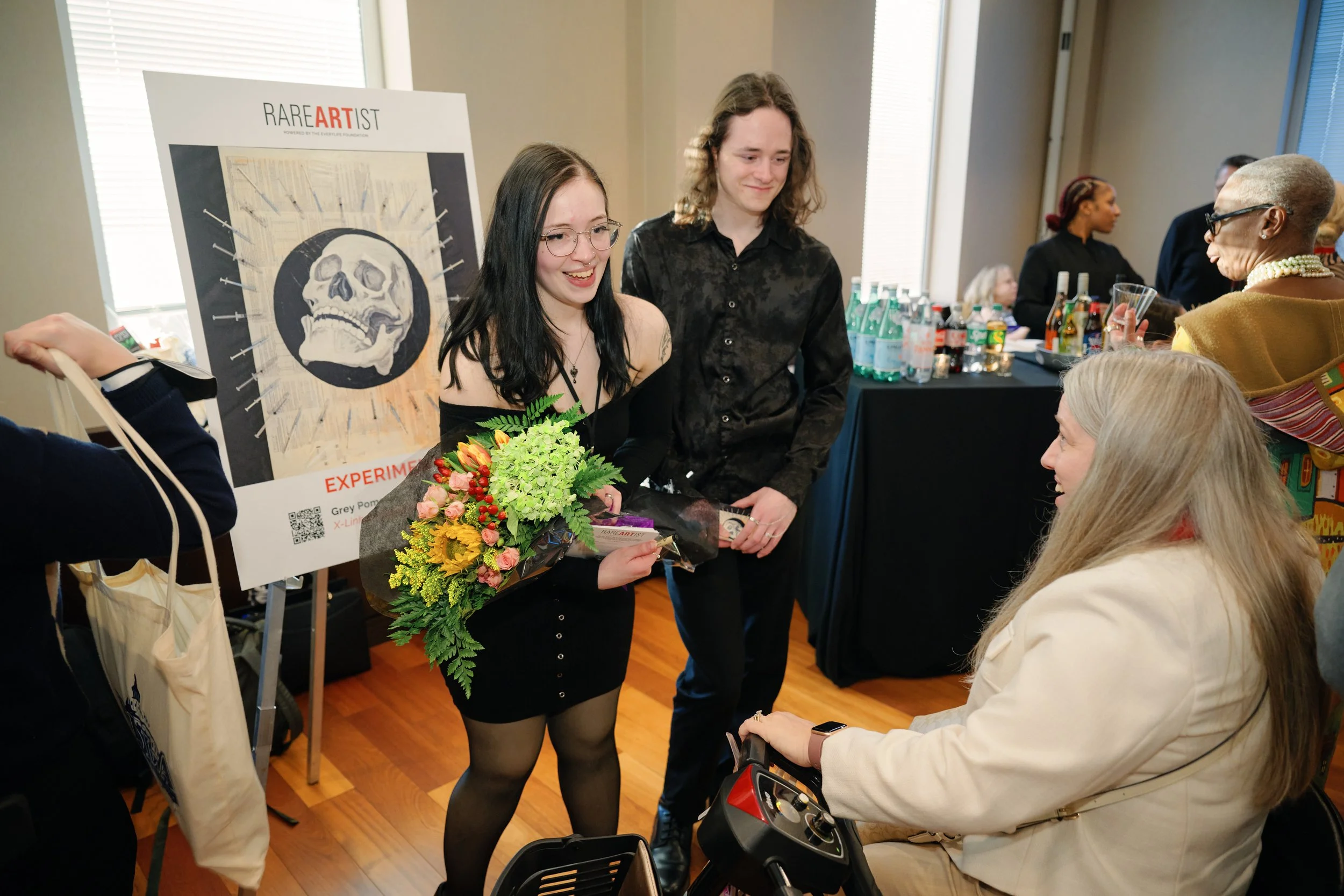
Grey Pomeroy receiving her Rare Artist award
Change can't happen in this space unless people are aware of it.
Based in Washington, DC, the EveryLife Foundation for Rare Diseases is a nonprofit organization powered by the rare disease community to drive advocacy, policy, and systemic change. Rare Artist, established in 2010, is one of the Foundation’s programs that advances this mission through creative storytelling and advocacy.
Opening on June 8th 2026, the annual Rare Artist contest invites participants aged 5 and older to share their lived experiences through traditional art, digital art, music, poetry, and film. Each year, approximately 230 submissions are received from patients, caregivers, siblings, and others connected to someone with a rare disease. Each submission includes an art piece and a brief artist statement. A panel of seven judges, including professional artists, Rare Artist alumni, arts and health leaders, physicians, and policy professionals, reviews submissions during a month-long process, evaluating entries on advocacy and storytelling, creativity, and originality. From this process, 20 finalists are selected, followed by a public vote in September to determine the final 10 awardees.
Through this process, Rare Artist transforms personal stories into creative works that bring visibility to individuals beyond spoken narratives. By elevating lived experience through art, the program fosters understanding, supports healing, and helps drive awareness, research, and policy change within the rare disease community.
“Rare Artist is an advocacy opportunity that allows people to share their rare disease journey through art — from the diagnostic odyssey to barriers in accessing care — and to center the human experience behind the diagnosis,” says Stephanie Riordan, Senior Director of Patient Programs at the EveryLife Foundation.
As part of her role, Stephanie oversees Rare Artist, a program that is deeply personal to her. She developed a love for art as a child and was later diagnosed with a rare disease while in college, an experience that shaped her decision to dedicate her career to the rare disease community. Leading Rare Artist has reignited her passion for art while allowing her to merge creativity with advocacy.
“This program is like my soul and spirit. It’s what keeps me driven each and every day.”
As part of the program, finalists work one-on-one with Stephanie to better understand the power of their voice and art. Working directly with artists is one of her favorite aspects of the role. “So many artists tell me they aren’t professionally trained and worry their work isn’t good enough,” she says. “I encourage them to embrace their art. It is good enough because it tells their story, and their story matters. They are the expert in their own journey, and that expertise comes through in their art.”
The ten awardees are invited to attend Rare Disease Week on Capitol Hill in February, where their artwork is displayed and used as a tool to support their advocacy efforts. During the week, artists continue to develop skills in storytelling and advocacy, learn about policies that impact the rare disease community, and meet directly with legislators. Some incorporate their artwork in creative ways during meetings, such as wearing it on a shirt or bag.
“Our legislators hear powerful stories from constituents every day,” Stephanie explains. “Art gives advocates another way to share those stories by bringing a tangible object into the room. It adds to the humanity of a policy. A picture really can be worth a thousand words, and legislators often remember artists from previous years because of their work and the meaning behind it. That kind of connection is a huge part of effective advocacy.”
In addition to being featured on Capitol Hill, Rare Artist pieces have been displayed at conferences, events, and research labs where rare disease therapies are developed. Some pieces are also awarded through the RareVoice Awards, a program that recognizes advocates who amplify the voice of the rare disease community in state and federal policy. New this year, the first public Rare Artist Gallery debuted at Children’s National Medical Center and will remain on display through August 2026.
Ready to advocate through art? The Rare Artist contest opens on June 8th at RareArtist.org.